Culturally Responsive Food Program –
Trying to Meet Black Food Needs
In 2024, Nicole, our Director of Programs & Agency Network, came to our regular 1-on-1 check-in with some news. The leaders of our B3 (Black-serving, Black-led, Black-focussed) food programs had come to her to share that Food Banks Mississauga wasn’t doing enough to meet the unique needs of Black folks experiencing food insecurity.
OOF. My heart fell into my stomach. It’s tough to hear that you’re not meeting the needs of some of the folks you serve! It’s true, though, that we serve a disproportionate number of Black food bank visitors, due to the longstanding impacts of colonization and systemic racism. In fact, the highest percentage of individuals living in food-insecure households in Canada is among Black people at 39.2%. Our B3 leaders had jolted us awake – it was time for us to listen, learn, and set off to work.
Those identifying as Black, African, or Caribbean make up almost 13% of those accessing food programs in Mississauga, but only 7% of Mississauga’s population (according to the 2021 census). The disproportionate food bank use (and food insecurity) among our Black community isn’t unique to our city – it’s a trend seen across Canada. According to “Black Food Insecurity in Canada” by Melana Roberts for the Broadbent Institute:
For many Black Canadians, the overriding factor determining their status as food insecure is the simple fact they are racialized as Black. Black communities are 3.5 times more likely to experience food insecurity compared to white Canadians, even after adjusting for factors like immigration status, education level, and homeownership. Black children were also 34 percent more likely to be food insecure compared to 10 percent of white children.
Nicole knew our B3 food program leaders were the experts on what would best meet the needs of our Black neighbours, so she convened an advisory committee. We had not budgeted for the project but wanted to respond as quickly as we could, so we applied for a (timely!) grant from Food Banks Canada intended to increase access to appropriate food, and we were happy to be awarded some funds! The committee selected a list of foods, we sourced them and started to ship out quarterly, and reviewed the impact and feedback regularly.

I have heard various thoughts about the value of culturally appropriate food over my years at the food bank. Things like, “if people were really hungry, they wouldn’t care what food they got,” or other variations on “beggars can’t be choosers”. And I admit, there have been times when money and food have been tight at the food bank, and we only have what we have received as donations, and I have felt the challenge of balancing to meet everyone’s needs.

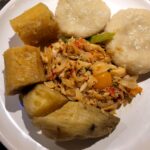
But food is not just food. Food is Culture.
Pause and think for a moment about your happiest celebration, or the favourite memory you have of a beloved family member, or the image that comes to mind when you hear the phrase, “just like Mom used to make”. I bet that there is food in those mental images. Food isn’t just calories in and calories out. Food is central to how we show our love, how we mark milestones, how we show care to one another. And everyone has a right to access food that is suitable for their needs – for calories and for special moments.
So this Black History Month, I want to celebrate the boldness of our B3 leaders who took the courage to tell us we needed to do more. Together, we are now making sure that individuals and families have access to more familiar and culturally significant ingredients. This addresses the immediate need of those experiencing food insecurity, gives folks a chance to access more nutrient-dense food and support better overall well-being, and can help reduce barriers to accessing food assistance for marginalized communities who may face language barriers or cultural differences that make it harder to navigate food security programs.
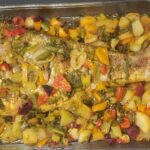


What foods are on the list?
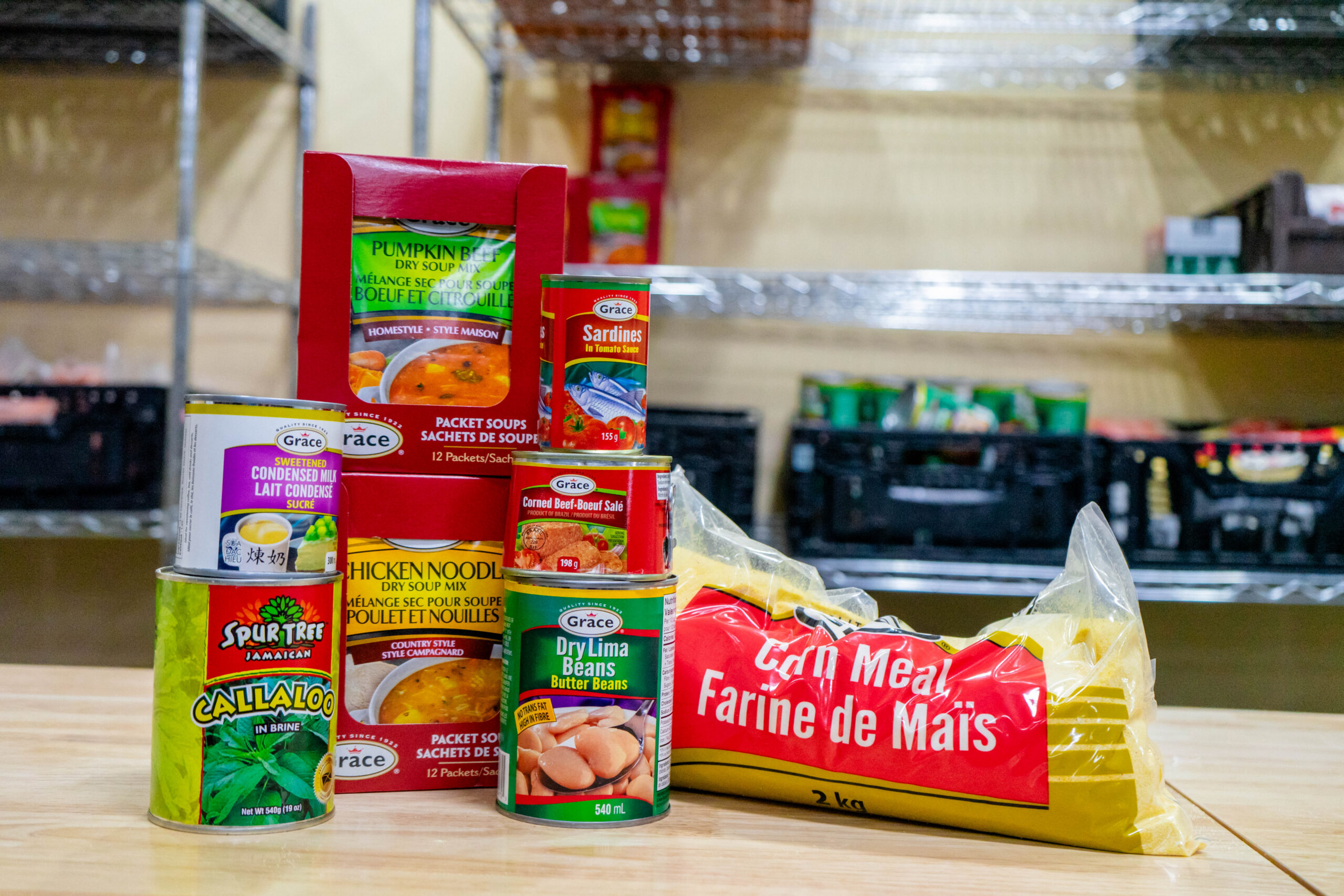
I know this was my question, too! The items for 2025 were: Coconut milk, Condensed Milk, Chicken soup, Corned beef, Cornmeal, Pumpkin beef soup, Red kidney beans, Black-eyed peas, Lima beans (Butter Beans), Rolled oats, Plantains, Salt fish, White Yam, Rice. For 2026, we’re super pleased that one of our farm partners is growing Callaloo for us to add to the offering!



What has the impact been?
Here are some quotes from recipients —
“It means a lot because it feels like I am closer to home and my culture even though I am far away.”
“Remembering my roots is like having a piece of home in a distant land.”
“It makes me feel a sense of representation, a sense of belonging, and that there is care. It reminds me of home away from home.”
We will continue fundraising to grow this program, and are hoping to conduct the same process in the future with the South Asian community – another group represented at food banks here in Mississauga.
Meghan Nicholls, CEO of Food Banks Mississauga
With over 20 years of experience in the nonprofit sector, Meghan worked with organizations dedicated to women’s development, international relief, and youth mental health before joining Food Banks Mississauga in 2009. Driven to end food insecurity in her own community, she has led Food Banks Mississauga to expand service by 340% while CEO. Meghan has served on Feed Ontario’s Board since 2020 and was elected Chair from 2022 – 2025. She holds a BA from York University, an Executive Certificate in Non-Profit Management from Georgetown University, and the Certified Fundraising Executive (CFRE) designation. In addition to a passion for her work, she enjoys doing crossword puzzles in a hammock, hanging out with her hubby, cats, and friends, and good cups of English breakfast tea.
Read more articles by Meghan at canadianfoodbanker.substack.com